Myths and Reality: What Konotop Residents Should Know About Piranhas
Scientists debunk popular cinematic myths about piranhas, explaining the true nature of these Amazonian predators and the risks of their appearance in atypical waters.
 🎓Education
Photo: UNIAN
Key points
- The Black piranha's bite is three times stronger than an alligator's.
- Most piranha species are omnivorous or even herbivorous.
- Releasing aquarium piranhas into non-native rivers threatens local biodiversity.
Piranhas have long held a reputation as some of the world's most dangerous predators, largely fueled by horror movies. However, the reality of these fish from the Serrasalmidae family is far more nuanced. Their diet is much more diverse than commonly believed, including not only meat but also insects, crustaceans, and even aquatic plants.
Unique Anatomy and Bite Force
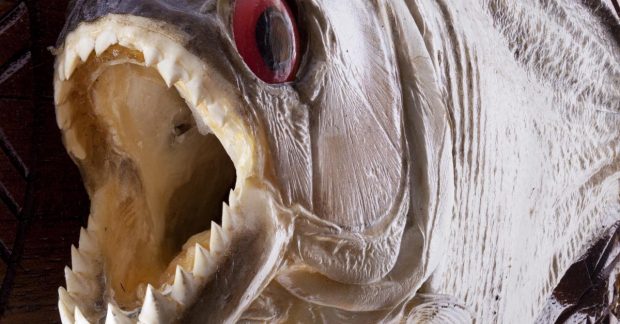
The primary feature of piranhas is their triangular teeth and incredibly powerful jaws. For instance, the Red-bellied piranha (Natterer's piranha) can reach up to 50 cm in length. When their jaws close, the teeth interlock like scissor blades, allowing them to tear through prey easily. Interestingly, piranhas replace their teeth in entire blocks: new teeth grow beneath the old ones, which then fall out simultaneously.
The Black piranha is considered the record-holder among bony fish for bite force. Its jaws can exert a pressure approximately three times stronger than that of an American alligator. Despite this power, many species do not specialize in hunting large animals. Some, like those in the Trombetas River basin, feed exclusively on algae, while others, such as the Catoprion genus, feed by nipping scales and fins off live fish without killing them.
Social Behavior and Human Safety
Red-bellied piranhas are known for staying in groups of 20 to 100 individuals. These shoals help them not only hunt more effectively using their keen sense of smell but also defend against predators like caimans, river dolphins, and large birds. Within the group, larger adults typically stay in the center for protection, while younger fish remain on the edges.
"Mass attacks on humans, often depicted in films, are extremely rare in reality and are usually triggered by extreme hunger or stress," nature researchers note.
The risk of bites increases only under specific circumstances: when water levels drop significantly, during food shortages, or when people accidentally disturb fish nests. Most incidents involving humans occur in the Orinoco and San Francisco river basins. It is important to note that finding human remains in their stomachs usually indicates scavenging rather than an attack on a living person.
Global Spread and Ecological Impact
While the natural habitat of piranhas is South America, they have been discovered in the UK, China, and the USA in recent decades. This is primarily due to aquarium owners releasing their pets into local waterways. Such practices pose a serious threat to local ecosystems, as invasive species can displace native fauna. Meanwhile, in regions like the Brazilian Pantanal, piranhas are a food source for humans, often used to make traditional fish soup.
Source UNIAN — unian.ua/curiosities/piranji-chim-harchuyutsya-ci-ribi-ta-naskilki-… ↗
Read next
 🇺🇦Ukraine
Italy’s Salvini Demands Apology from Zelenskyy Over Peacemaker Database Controversy
Italian Deputy Prime Minister Matteo Salvini has demanded an apology from Ukraine's president over his inclusion in the Peacemaker database, warning it could affect futur…
 🛡️Security
Another enemy attack on Kyiv region leaves one dead and several injured
A Russian attack in the Bila Tserkva district of the Kyiv region resulted in one fatality and four injuries. Emergency services continue to operate at the scene.
 🇺🇦Ukraine
Czech Prime Minister Opposes Funding Ukraine Within EU Budget Framework
Czech Prime Minister Andrej Babiš has criticized the proposed EU long-term budget for 2028–2034, specifically objecting to the inclusion of financial aid for Ukraine with…
 🏙️City
How to Safely Use a Melamine Sponge at Home: Tips for Konotop Residents
Practical recommendations on using this popular cleaning tool without damaging household surfaces. We explain which materials can be cleaned with a melamine sponge and wh…
 🛡️Security
Poland Demands NATO Strengthen Eastern Flank Air Defense After Missile Incursion
Following the intrusion of Russian missiles and drones into Polish airspace, Warsaw initiated a NATO Council meeting to boost regional defense.
 🛡️Security
Ukrainian Soldier Downs Jet-Powered Drone with Standard Assault Rifle
On the Sloviansk direction, a Ukrainian mobile fire group member successfully neutralized a high-speed enemy jet drone using a standard AKS rifle.